
English| EUR
Suggested for you
More currencies
Choose a language
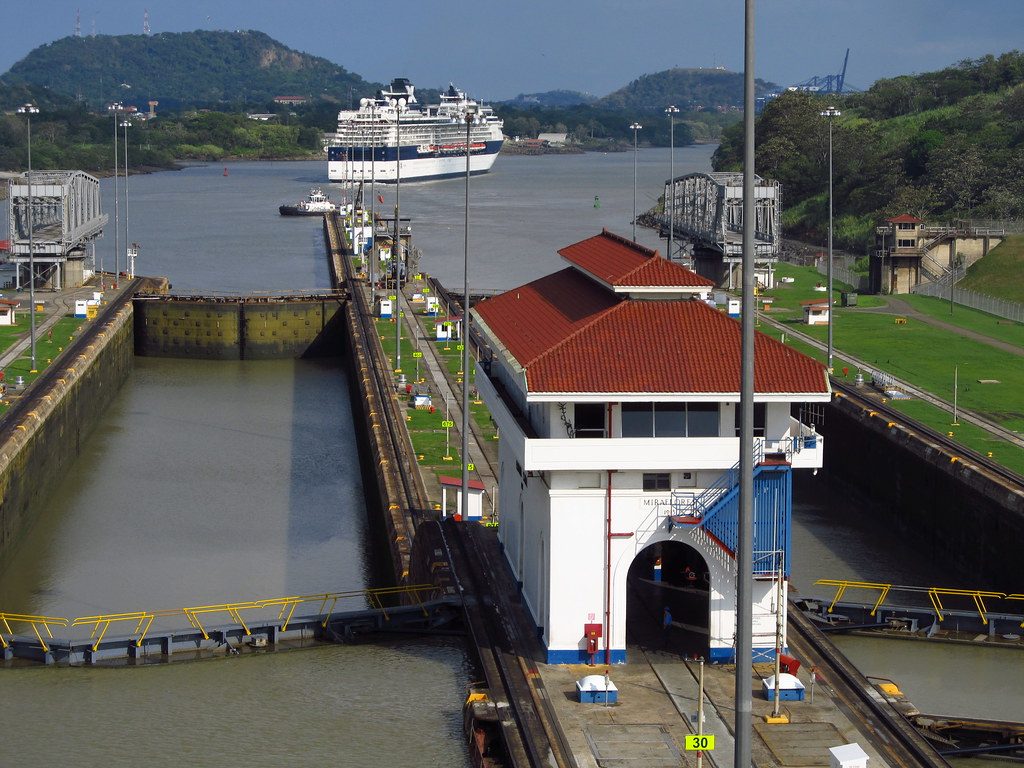
The Panama Canal operates three separate lock complexes containing a total of twelve individual chambers. Each complex serves a distinct function in lifting or lowering vessels between sea level and Gatun Lake, and the Miraflores Visitor Center offers direct observation of the Pacific-side chambers in action throughout the day.
Quick answer
The Panama Canal contains twelve lock chambers divided across three distinct complexes: Miraflores with two chambers on the Pacific side, Pedro Miguel with one chamber just north of Miraflores, and Gatun with three chambers on the Atlantic side. Each chamber operates in pairs to form six sequential lock gates that raise or lower ships a combined 85 feet between ocean and lake elevation.
When engineers broke ground in 1904, the lock-and-lake design solved a problem that had defeated the French a decade earlier. Rather than excavating to sea level through the Continental Divide, the Americans built a system that lifts ships to an artificial lake 85 feet above the Pacific, transits them across the isthmus, then lowers them back to Atlantic sea level. The number of lock chambers reflects that elevation geometry with precision. Miraflores handles the first two steps on the Pacific approach, raising vessels 54 feet in two stages separated by a small intermediate lake. Three miles north, Pedro Miguel provides one additional lift of 31 feet to reach Gatun Lake. Ships then cross the lake and descend through Gatun's three chambers on the Atlantic side, reversing the elevation gain in a single cascading sequence. Each chamber measures 110 feet wide and 1,000 feet long, dimensions that defined maximum ship size for global maritime engineering until the 2016 expansion locks opened alongside the original system. The lock count matters because it determines transit time and operational complexity. A typical vessel spends eight to ten hours moving through the canal, with roughly half that time inside the chambers as water levels equalize. Miraflores sees the highest traffic volume because every Pacific-bound ship passes through twice—once during the initial lift and again during the final descent—making it the logical site for the public observation terraces. The chambers operate 24 hours daily, and the sequencing is visible from the viewing platforms when natural light permits. Understanding the three-complex structure clarifies what visitors observe from the Miraflores terrace. The two visible chambers represent only the beginning of a six-step process, and the scale of each lift becomes tangible when a Panamax container ship enters the chamber and the water begins to rise. The original 1914 engineering remains in daily use, with each chamber gate weighing 750 tons and requiring only a 40-horsepower motor to swing open against the hydraulic pressure.
“Each chamber measures 110 feet wide and 1,000 feet long, dimensions that defined maximum ship size for global maritime engineering until the 2016 expansion locks opened alongside the original system.”
This plan suits visitors who want to observe lock operations and explore the exhibits at the Miraflores Visitor Center. Allow 3–4 hours for the full experience.
Arrive when the center opens to secure a spot on the viewing platform before the first transit window. Entry includes access to all exhibits and the IMAX theater.
Watch vessels transit through the two-chamber Miraflores Locks from the four-story viewing platform. Ship schedules vary, so check the daily transit board upon arrival to plan viewing times.
Walk through the exhibition halls covering the canal's construction, engineering, and ecological impact. The museum spans four floors with interactive displays and historical artifacts.
Watch the 40-minute documentary on the canal's history and expansion, included with your entrance ticket. Showtimes run hourly; confirm the schedule at the ticket desk.
The on-site café overlooks the locks, offering a view of any afternoon transits while you eat. Light fare and beverages available.
Return to the observation deck for afternoon transits, typically busier between 14:00–17:00. Arrive early to claim a rail position.
The Miraflores Visitor Center maintains consistent daily operational hours throughout the week to accommodate visitors interested in viewing the lock operations.
The Miraflores Visitor Center is located at the Panama Canal in Panama City, Panama. The most direct approach for visitors is by taxi or private car, as public transit does not provide direct service to the visitor center entrance.
Direct route via Gaillard Highway (Avenida Omar Torrijos)
Parking available at Miraflores Visitor Center via Gaillard Highway
MetroBus to the nearest stop on Gaillard Highway then walk
For the best experience, plan your arrival within the 08:00–17:00 window, ensuring you avoid the mid-day transit gap between 10:00–14:00. Private transport is recommended to reach the specific parking area at the visitor center entrance.
To optimize your chances of observing ships in the locks, the best arrival window is 08:00–17:00. It is essential to avoid the mid-day transit gap between 10:00 and 14:00 to ensure you see vessels navigating the system.
Sunny and dry, 24–32°C
Clear skies provide visibility, though visitor numbers are at their highest.
Humid with rain, 23–31°C
Rain showers are frequent but brief, offering a lush landscape for viewing.
—
Arriving at 08:00 allows time to explore museum exhibits before the peak transit periods begin.
Verdict: The best time to visit is on a weekday, arriving at 08:00 during the months of April or October to balance crowd levels and transit frequency.
Everything you need to know about how many locks in the panama canal
The Panama Canal currently utilizes three main sets of locks: Miraflores, Pedro Miguel, and Gatun. Each set functions as a water elevator to lift vessels between ocean levels and the man-made Gatun Lake. While learning how many locks in the panama canal exist, visitors often find the engineering behind these chambers fascinating.
Yes, the Miraflores Visitor Center offers a dedicated view of the lock chambers where you can observe ships transiting. Many travelers combine a visit to this site with a broader Panama City canal tour to see the industrial scale of the waterway. It remains the most accessible point to understand how many locks in the panama canal work in real-time.
The adult non-resident entrance fee is 17.22 USD, which includes access to the museum and the IMAX theater. This ticket provides full access to the observation decks, allowing you to see the gates and culverts in action. Please check our booking widget for current availability before planning your trip to see how many locks in the panama canal you can view.
The best arrival window is 08:00–17:00, though we recommend avoiding the mid-day transit gap between 10:00 and 14:00 when ship movement is limited. Planning your day around this schedule ensures you have ample time to explore the exhibits. It is helpful to research how many locks in the panama canal you plan to observe before you arrive.
Yes, the visitor center is open from 08:00 to 18:00 every day, including weekends. This schedule accommodates visitors interested in maritime history and the mechanics of the canal. You can comfortably visit any day to learn how many locks in the panama canal are operational.
The canal features three distinct sets of locks that facilitate the passage of ships across the Isthmus of Panama. These massive structures, including the recent expansion sets, form the core of the canal's transit system. Understanding the scale of these chambers provides context for the history of this vital global maritime landmark.